NEWS
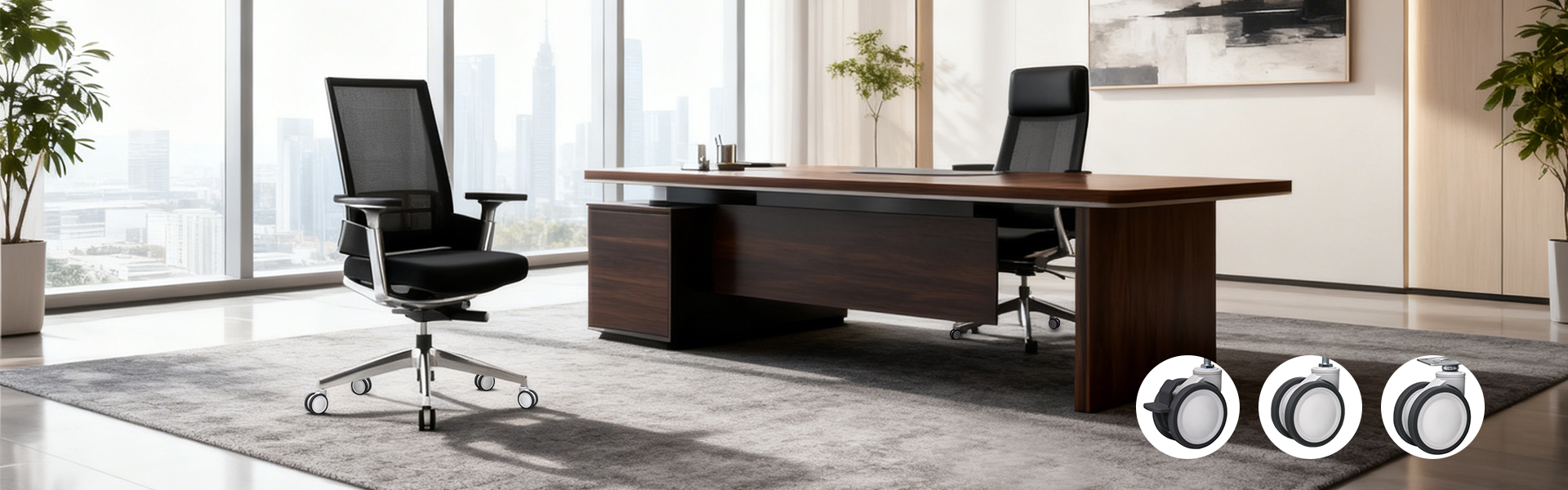
Which Caster Material Is Right for You? A Complete Pros and Cons Comparison
2026-03-12
When it comes to choosing casters for your equipment, furniture, or industrial machinery, the material of the caster wheel is one of the most critical factors that directly impacts performance, durability, and cost. Different materials excel in specific environments—from smooth office floors to rough industrial warehouses, and from light-duty carts to heavy-load machinery. In this blog, we’ll break down the most common caster materials, their key advantages, disadvantages, and ideal use cases, helping you make an informed decision for your needs.
1. Rubber Casters
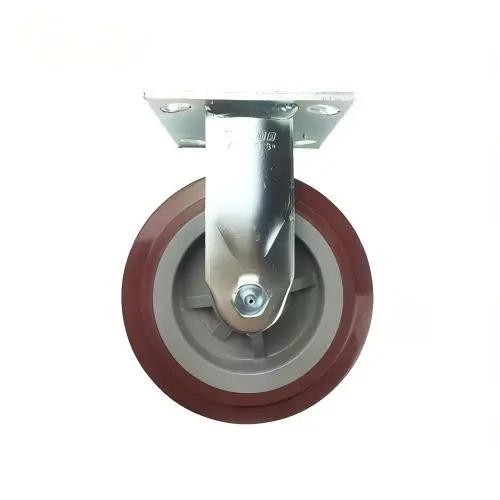
Rubber is one of the most widely used caster materials, known for its versatility and shock-absorbing properties.
Pros
• Excellent shock absorption: Reduces vibration and noise, making it ideal for environments where noise reduction is important (e.g., offices, hospitals, retail stores).
• Floor protection: Soft rubber surface prevents scratches, scuffs, and damage to delicate floors like hardwood, tile, or linoleum.
• Good traction: Performs well on both dry and slightly wet surfaces, reducing the risk of slipping.
• Affordable: Generally less expensive than premium materials like polyurethane, making it a cost-effective choice for light to medium-duty applications.
Cons
• Limited load capacity: Not suitable for heavy loads (typically max 500 lbs per caster); overloading can cause deformation or tearing.
• Poor resistance to chemicals and oils: Rubber can swell, degrade, or crack when exposed to solvents, oils, or harsh cleaning agents.
• Wears quickly in rough environments: Abrasive surfaces (e.g., concrete, gravel) can cause premature wear, reducing the caster’s lifespan.
• Susceptible to extreme temperatures: Can become brittle in cold conditions (below 32°F/0°C) and soft in high temperatures (above 120°F/49°C), affecting performance.
2. PU Casters
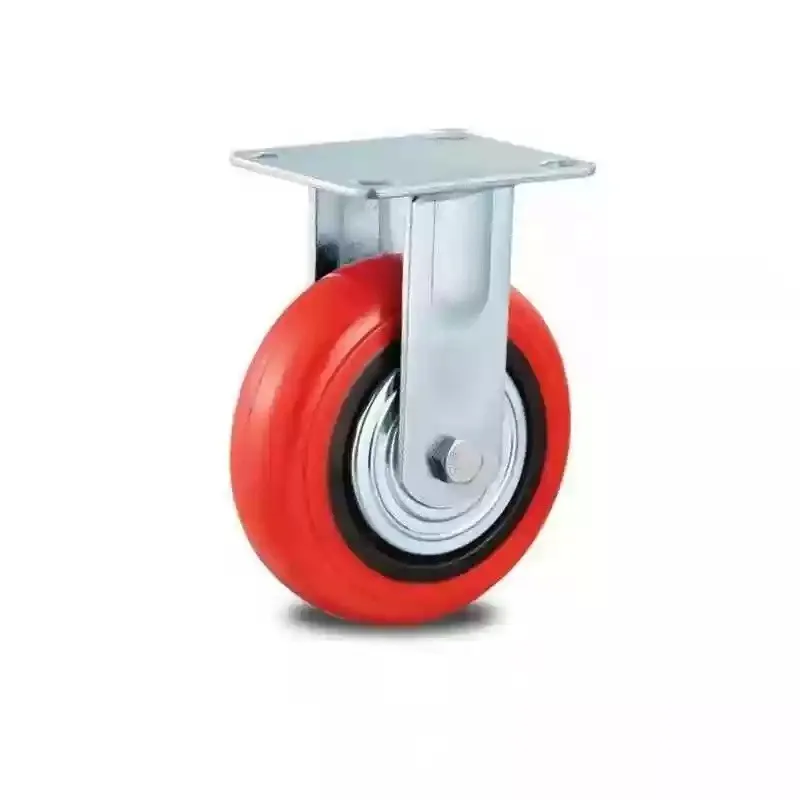
Polyurethane (PU) is a synthetic material that combines the best properties of rubber and plastic, making it one of the most popular choices for both light and heavy-duty applications. It is often used as a coating over a hard core (e.g., nylon, steel) for added strength.
Pros
• Balanced performance: Offers the shock absorption of rubber and the durability of plastic, making it versatile for various environments.
• High load capacity: Can handle heavier loads than rubber (up to 2,000 lbs per caster, depending on size and design).
• Excellent floor protection: Soft yet durable surface prevents floor damage, even on delicate surfaces.
• Good chemical resistance: Resists oils, solvents, and most cleaning agents, making it suitable for industrial and commercial settings.
• Long lifespan: Wears slower than rubber, even on abrasive surfaces, reducing replacement frequency.
• Temperature resistance: Performs well in a wide range of temperatures (-40°F to 180°F/-40°C to 82°C), making it suitable for indoor and outdoor use.
Cons
• Higher cost: More expensive than rubber and nylon, which may be a deterrent for budget-sensitive projects.
• Can flat-spot if stationary for long periods: If the caster is left under heavy load without movement, the PU surface may develop a flat spot, causing vibration when rolled.
• Less traction than rubber: On extremely wet or slippery surfaces, PU may not grip as well as rubber.
3. PP Casters
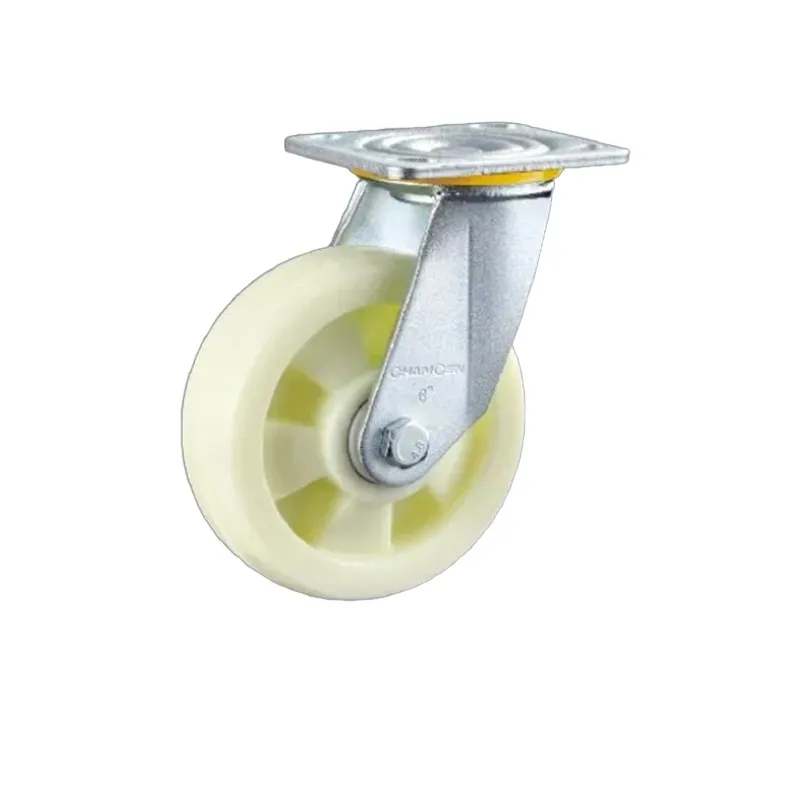
Polypropylene (PP) is a lightweight, rigid plastic material widely used in light to medium-duty caster applications. It is known for its chemical resistance, low cost, and versatility, making it a popular choice for commercial and residential use.
Pros
• Lightweight: One of the lightest caster materials, reducing the overall weight of equipment and making it easier to maneuver.
• Excellent chemical resistance: Resists most acids, alkalis, solvents, and oils, making it suitable for laboratory, food service, and cleaning equipment.
• Affordable: Cost-effective option for light to medium-duty applications, cheaper than PU and nylon.
• Moisture-resistant: Does not absorb water, preventing swelling or degradation in humid environments.
• Smooth rolling: Low friction surface allows for easy movement on smooth to moderately rough surfaces.
Cons
• Low load capacity: Only suitable for light to medium loads (max 800 lbs per caster), not ideal for heavy-duty use.
• Poor impact resistance: Brittle compared to nylon and PU, prone to cracking or breaking under heavy impact.
• Limited temperature resistance: Can soften at high temperatures (above 180°F/82°C) and become brittle in cold conditions (below 32°F/0°C).
• Floor damage risk: Hard surface can scratch delicate floors (e.g., hardwood, tile) without proper protection.
4. TPR Casters
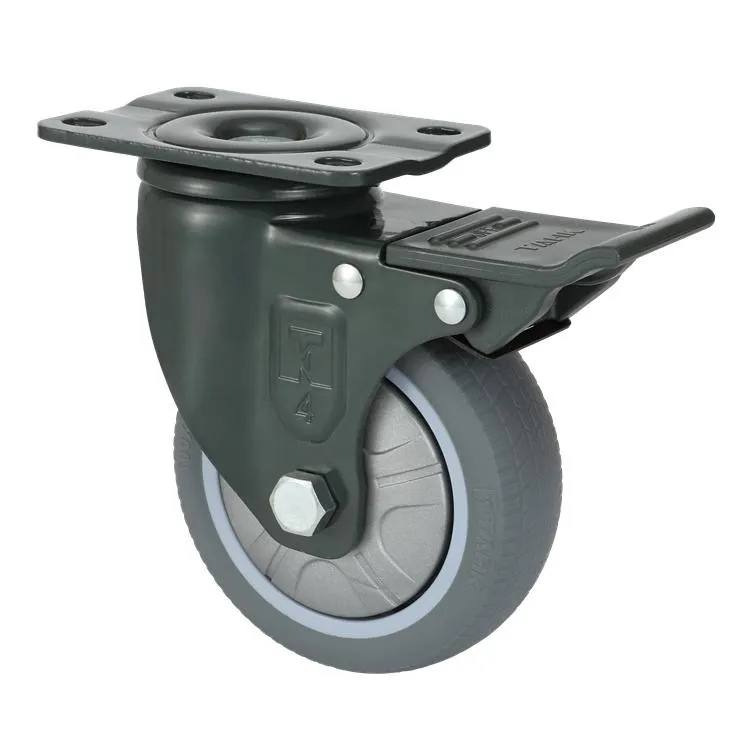
Thermoplastic Rubber (TPR) is a synthetic elastomer that combines the flexibility of rubber with the durability of plastic. It is often used as a coating over a hard core (e.g., PP, nylon) to enhance traction and floor protection, making it suitable for both indoor and light outdoor use.
Pros
• Excellent traction: Soft, grippy surface provides strong traction on both dry and slightly wet surfaces, reducing slipping.
• Floor protection: Non-marking surface prevents scratches and scuffs on delicate floors like hardwood, tile, and laminate.
• Shock absorption: Flexible material reduces vibration and noise, making it suitable for quiet environments (e.g., offices, hospitals, homes).
• Durable and wear-resistant: More resistant to wear than natural rubber, with a longer lifespan in moderate environments.
• Good temperature resistance: Performs well in a range of temperatures (-20°F to 150°F/-29°C to 66°C), suitable for most indoor and light outdoor use.
Cons
• Limited load capacity: Suitable for light to medium loads (max 1,000 lbs per caster), not for heavy industrial use.
• Poor chemical resistance: Can degrade when exposed to harsh solvents, oils, and strong cleaning agents.
• Not ideal for rough environments: Abrasive surfaces (e.g., concrete, gravel) can cause premature wear on the TPR coating.
• Higher cost than rubber: More expensive than natural rubber, though more affordable than PU.
5. Nylon Casters
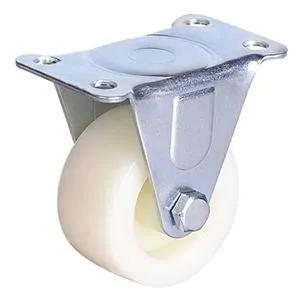
Nylon is a hard, rigid plastic material that is known for its strength and resistance to wear. It is a popular choice for industrial and heavy-duty applications where durability and load capacity are top priorities.
Pros
• Exceptional load capacity: One of the strongest plastic caster materials, capable of handling loads up to 3,000 lbs per caster (depending on size).
• High wear resistance: Performs well on rough, abrasive surfaces (e.g., concrete, gravel) without premature wear.
• Excellent chemical resistance: Resists oils, solvents, chemicals, and moisture, making it suitable for industrial, laboratory, and food processing environments.
• Low friction: Rolls smoothly on most surfaces, requiring less force to move heavy loads.
• Affordable: Less expensive than PU, making it a cost-effective choice for heavy-duty applications.
• Temperature resistance: Performs well in extreme temperatures (-40°F to 250°F/-40°C to 121°C).
Cons
• No shock absorption: Rigid material transmits vibration and noise, which is not ideal for quiet environments or delicate equipment.
• Floor damage risk: Hard surface can scratch or scuff delicate floors (e.g., hardwood, tile) if not used with a floor protector.
• Poor traction on wet surfaces: Smooth surface can slip on wet or oily floors, increasing the risk of accidents.
• Brittle in cold temperatures: While it can withstand cold, extreme cold may make nylon more prone to cracking under impact.
6. Steel Casters
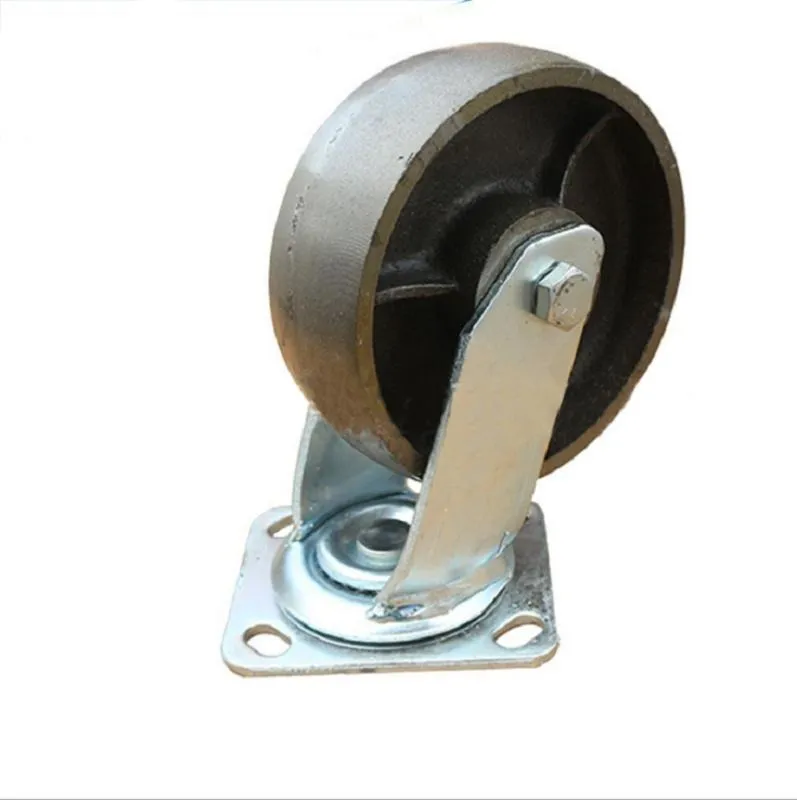
Steel casters are the most durable and heavy-duty option, designed for extreme loads and harsh industrial environments. They are often used in manufacturing, warehouses, and construction sites where strength is non-negotiable.
Pros
• Maximum load capacity: Can handle the heaviest loads (up to 10,000 lbs per caster or more, depending on design), making it ideal for heavy machinery and equipment.
• Extreme durability: Resists wear, impact, and deformation, even in the harshest environments (e.g., construction sites, foundries).
• Excellent temperature resistance: Can withstand extreme heat (up to 500°F/260°C) and cold, making it suitable for high-temperature applications (e.g., ovens, foundries).
• Chemical resistance: Resists most chemicals, oils, and solvents, making it suitable for industrial settings.
Cons
• Floor damage: Hard steel surface can severely scratch or damage delicate floors; even concrete floors may show wear over time.
• High noise and vibration: No shock absorption, so rolling over uneven surfaces produces loud noise and transmits vibration, which can damage delicate equipment.
• Heavy weight: Steel casters are much heavier than other materials, which can add to the overall weight of the equipment.
• Prone to rust: Uncoated steel can rust if exposed to moisture; requires regular maintenance (e.g., painting, galvanizing) to prevent corrosion.
• High cost: The most expensive option, due to the material and manufacturing process.
Final Comparison & Recommendation
To help you quickly choose the right caster material for your application, here’s a summary of key factors:
• Light-duty, quiet environments (offices, retail, hospitals): Rubber, TPR, or PU casters (prioritize floor protection and noise reduction).
• Light to medium-duty, chemical-exposed environments (cleaning, labs): PP or TPR casters (prioritize chemical resistance and lightweight design).
• Medium to heavy-duty, industrial settings (warehouses, manufacturing): PU or nylon casters (balance of durability and load capacity).
• Extreme heavy loads (construction, heavy machinery): Steel casters (maximum strength and durability).
At Promove Caster, we offer a full range of casters in all the materials mentioned above, customized to your specific load capacity, environment, and application needs. Whether you need light-duty rubber casters for office furniture or heavy-duty steel casters for industrial machinery, our team can help you find the perfect solution.
Have questions about which caster material is right for you? Contact our experts today for personalized advice!
When it comes to choosing casters for your equipment, furniture, or industrial machinery, the material of the caster wheel is one of the most critical factors that directly impacts performance, durability, and cost. Different materials excel in specific environments—from smooth office floors to rough industrial warehouses, and from light-duty carts to heavy-load machinery. In this blog, we’ll break down the most common caster materials, their key advantages, disadvantages, and ideal use cases, helping you make an informed decision for your needs.
1. Rubber Casters
Rubber is one of the most widely used caster materials, known for its versatility and shock-absorbing properties.
Pros
• Excellent shock absorption: Reduces vibration and noise, making it ideal for environments where noise reduction is important (e.g., offices, hospitals, retail stores).
• Floor protection: Soft rubber surface prevents scratches, scuffs, and damage to delicate floors like hardwood, tile, or linoleum.
• Good traction: Performs well on both dry and slightly wet surfaces, reducing the risk of slipping.
• Affordable: Generally less expensive than premium materials like polyurethane, making it a cost-effective choice for light to medium-duty applications.
Cons
• Limited load capacity: Not suitable for heavy loads (typically max 500 lbs per caster); overloading can cause deformation or tearing.
• Poor resistance to chemicals and oils: Rubber can swell, degrade, or crack when exposed to solvents, oils, or harsh cleaning agents.
• Wears quickly in rough environments: Abrasive surfaces (e.g., concrete, gravel) can cause premature wear, reducing the caster’s lifespan.
• Susceptible to extreme temperatures: Can become brittle in cold conditions (below 32°F/0°C) and soft in high temperatures (above 120°F/49°C), affecting performance.
2. PU Casters
Polyurethane (PU) is a synthetic material that combines the best properties of rubber and plastic, making it one of the most popular choices for both light and heavy-duty applications. It is often used as a coating over a hard core (e.g., nylon, steel) for added strength.
Pros
• Balanced performance: Offers the shock absorption of rubber and the durability of plastic, making it versatile for various environments.
• High load capacity: Can handle heavier loads than rubber (up to 2,000 lbs per caster, depending on size and design).
• Excellent floor protection: Soft yet durable surface prevents floor damage, even on delicate surfaces.
• Good chemical resistance: Resists oils, solvents, and most cleaning agents, making it suitable for industrial and commercial settings.
• Long lifespan: Wears slower than rubber, even on abrasive surfaces, reducing replacement frequency.
• Temperature resistance: Performs well in a wide range of temperatures (-40°F to 180°F/-40°C to 82°C), making it suitable for indoor and outdoor use.
Cons
• Higher cost: More expensive than rubber and nylon, which may be a deterrent for budget-sensitive projects.
• Can flat-spot if stationary for long periods: If the caster is left under heavy load without movement, the PU surface may develop a flat spot, causing vibration when rolled.
• Less traction than rubber: On extremely wet or slippery surfaces, PU may not grip as well as rubber.
3. PP Casters
Polypropylene (PP) is a lightweight, rigid plastic material widely used in light to medium-duty caster applications. It is known for its chemical resistance, low cost, and versatility, making it a popular choice for commercial and residential use.
Pros
• Lightweight: One of the lightest caster materials, reducing the overall weight of equipment and making it easier to maneuver.
• Excellent chemical resistance: Resists most acids, alkalis, solvents, and oils, making it suitable for laboratory, food service, and cleaning equipment.
• Affordable: Cost-effective option for light to medium-duty applications, cheaper than PU and nylon.
• Moisture-resistant: Does not absorb water, preventing swelling or degradation in humid environments.
• Smooth rolling: Low friction surface allows for easy movement on smooth to moderately rough surfaces.
Cons
• Low load capacity: Only suitable for light to medium loads (max 800 lbs per caster), not ideal for heavy-duty use.
• Poor impact resistance: Brittle compared to nylon and PU, prone to cracking or breaking under heavy impact.
• Limited temperature resistance: Can soften at high temperatures (above 180°F/82°C) and become brittle in cold conditions (below 32°F/0°C).
• Floor damage risk: Hard surface can scratch delicate floors (e.g., hardwood, tile) without proper protection.
4. TPR Casters
Thermoplastic Rubber (TPR) is a synthetic elastomer that combines the flexibility of rubber with the durability of plastic. It is often used as a coating over a hard core (e.g., PP, nylon) to enhance traction and floor protection, making it suitable for both indoor and light outdoor use.
Pros
• Excellent traction: Soft, grippy surface provides strong traction on both dry and slightly wet surfaces, reducing slipping.
• Floor protection: Non-marking surface prevents scratches and scuffs on delicate floors like hardwood, tile, and laminate.
• Shock absorption: Flexible material reduces vibration and noise, making it suitable for quiet environments (e.g., offices, hospitals, homes).
• Durable and wear-resistant: More resistant to wear than natural rubber, with a longer lifespan in moderate environments.
• Good temperature resistance: Performs well in a range of temperatures (-20°F to 150°F/-29°C to 66°C), suitable for most indoor and light outdoor use.
Cons
• Limited load capacity: Suitable for light to medium loads (max 1,000 lbs per caster), not for heavy industrial use.
• Poor chemical resistance: Can degrade when exposed to harsh solvents, oils, and strong cleaning agents.
• Not ideal for rough environments: Abrasive surfaces (e.g., concrete, gravel) can cause premature wear on the TPR coating.
• Higher cost than rubber: More expensive than natural rubber, though more affordable than PU.
5. Nylon Casters
Nylon is a hard, rigid plastic material that is known for its strength and resistance to wear. It is a popular choice for industrial and heavy-duty applications where durability and load capacity are top priorities.
Pros
• Exceptional load capacity: One of the strongest plastic caster materials, capable of handling loads up to 3,000 lbs per caster (depending on size).
• High wear resistance: Performs well on rough, abrasive surfaces (e.g., concrete, gravel) without premature wear.
• Excellent chemical resistance: Resists oils, solvents, chemicals, and moisture, making it suitable for industrial, laboratory, and food processing environments.
• Low friction: Rolls smoothly on most surfaces, requiring less force to move heavy loads.
• Affordable: Less expensive than PU, making it a cost-effective choice for heavy-duty applications.
• Temperature resistance: Performs well in extreme temperatures (-40°F to 250°F/-40°C to 121°C).
Cons
• No shock absorption: Rigid material transmits vibration and noise, which is not ideal for quiet environments or delicate equipment.
• Floor damage risk: Hard surface can scratch or scuff delicate floors (e.g., hardwood, tile) if not used with a floor protector.
• Poor traction on wet surfaces: Smooth surface can slip on wet or oily floors, increasing the risk of accidents.
• Brittle in cold temperatures: While it can withstand cold, extreme cold may make nylon more prone to cracking under impact.
6. Steel Casters
Steel casters are the most durable and heavy-duty option, designed for extreme loads and harsh industrial environments. They are often used in manufacturing, warehouses, and construction sites where strength is non-negotiable.
Pros
• Maximum load capacity: Can handle the heaviest loads (up to 10,000 lbs per caster or more, depending on design), making it ideal for heavy machinery and equipment.
• Extreme durability: Resists wear, impact, and deformation, even in the harshest environments (e.g., construction sites, foundries).
• Excellent temperature resistance: Can withstand extreme heat (up to 500°F/260°C) and cold, making it suitable for high-temperature applications (e.g., ovens, foundries).
• Chemical resistance: Resists most chemicals, oils, and solvents, making it suitable for industrial settings.
Cons
• Floor damage: Hard steel surface can severely scratch or damage delicate floors; even concrete floors may show wear over time.
• High noise and vibration: No shock absorption, so rolling over uneven surfaces produces loud noise and transmits vibration, which can damage delicate equipment.
• Heavy weight: Steel casters are much heavier than other materials, which can add to the overall weight of the equipment.
• Prone to rust: Uncoated steel can rust if exposed to moisture; requires regular maintenance (e.g., painting, galvanizing) to prevent corrosion.
• High cost: The most expensive option, due to the material and manufacturing process.
Final Comparison & Recommendation
To help you quickly choose the right caster material for your application, here’s a summary of key factors:
• Light-duty, quiet environments (offices, retail, hospitals): Rubber, TPR, or PU casters (prioritize floor protection and noise reduction).
• Light to medium-duty, chemical-exposed environments (cleaning, labs): PP or TPR casters (prioritize chemical resistance and lightweight design).
• Medium to heavy-duty, industrial settings (warehouses, manufacturing): PU or nylon casters (balance of durability and load capacity).
• Extreme heavy loads (construction, heavy machinery): Steel casters (maximum strength and durability).
At Promove Caster, we offer a full range of casters in all the materials mentioned above, customized to your specific load capacity, environment, and application needs. Whether you need light-duty rubber casters for office furniture or heavy-duty steel casters for industrial machinery, our team can help you find the perfect solution.
Have questions about which caster material is right for you? Contact our experts today for personalized advice!

Contact Info
Email: enquiry@promovecaster.com
Tel: +86 139 2491 9427
WhatsApp: +86 134 2750 7341
Address: Yonglong Road, JiDongYi, Xiaolan Town, Zhongshan City, Guangdong Province, China
Copyright © 2025 Zhongshan Promove Caster Co., Ltd.