NEWS
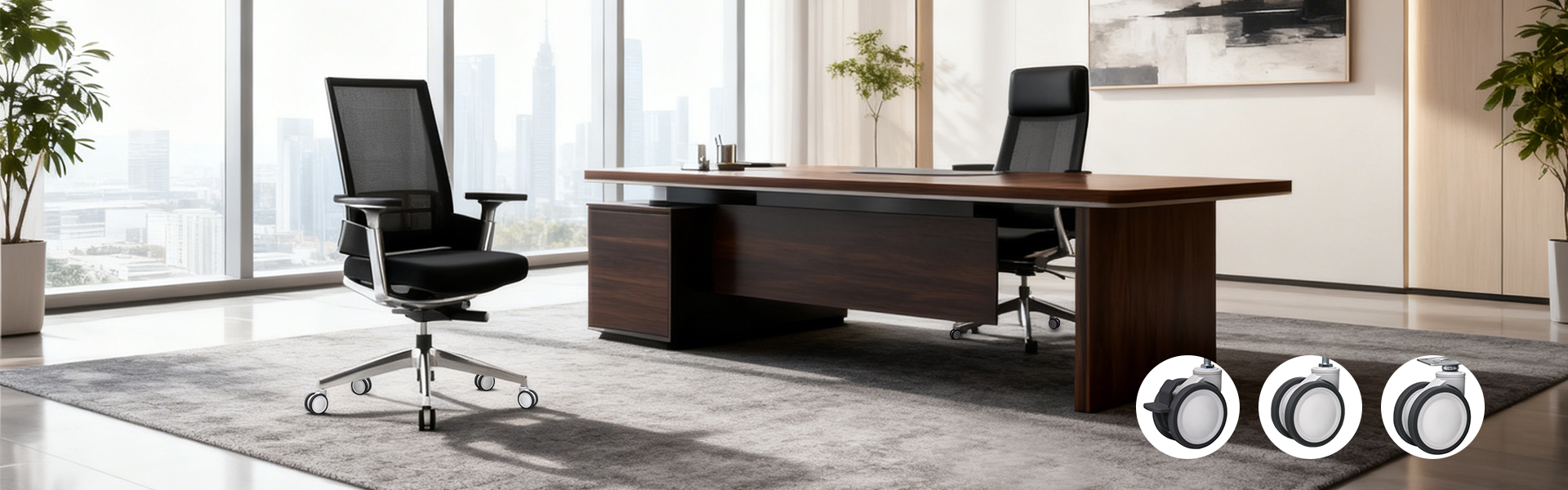
The Differences Between Light-Duty, Medium-Duty, and Heavy-Duty Casters
2026-03-15
1. Light-Duty Casters: For Lightweight, Everyday Use
Light-duty casters are designed for applications where the total load is relatively low, and movement is frequent but not strenuous. They are the most common type found in residential, office, and light commercial settings, prioritizing maneuverability and affordability over extreme durability.
Key Features
• Load Capacity: Typically ranges from 50 to 200 pounds (22.7 to 90.7 kg) per caster. Keep in mind that the total load of the item (including the item itself and any contents) should be evenly distributed across all casters—never exceed the individual caster’s capacity.
• Materials: Wheels are often made of plastic (such as polypropylene or nylon), rubber, or soft polyurethane. These materials are lightweight, quiet, and gentle on floors (like hardwood, tile, or carpet), making them ideal for indoor use.
• Design: Usually feature a small wheel diameter (2 to 4 inches), a simple swivel mechanism, and a lightweight frame (often made of steel or aluminum). Many light-duty casters are stem-mounted (inserted into a socket) or plate-mounted (attached with screws), depending on the application.
• Maneuverability: Exceptionally easy to swivel and roll, even with minimal force. Perfect for items that need to be moved frequently, such as office chairs, mobile storage cabinets, or small utility carts.
Ideal Uses
Light-duty casters are perfect for:
- Office furniture (chairs, desks, file cabinets)
- Residential items (rolling plant stands, storage bins, small carts)
- Light commercial use (retail display racks, small shipping carts in boutiques)
- Any application where the load is light and movement is mostly on smooth, indoor surfaces.
2. Medium-Duty Casters: For Balanced Loads and Versatility
Medium-duty casters bridge the gap between light and heavy-duty options, designed for applications with moderate loads and occasional exposure to slightly rough surfaces. They offer more durability than light-duty casters while remaining maneuverable and cost-effective—making them a popular choice for commercial and light industrial settings.
Key Features
• Load Capacity: Ranges from 200 to 1,000 pounds (90.7 to 453.6 kg) per caster. This makes them suitable for items that are heavier than office furniture but not as heavy as industrial machinery.
• Materials: Wheels are often made of polyurethane (PU), rubber, or cast iron (for more durability). The frame is typically made of heavy-gauge steel, which adds strength without excessive weight. Some medium-duty casters feature treaded wheels for better traction on uneven surfaces.
• Design: Wheel diameter ranges from 4 to 6 inches, with a more robust swivel mechanism (often with ball bearings for smoother movement). Most are plate-mounted for added stability, though stem-mounted options are also available. Many include brakes (lockable swivel or wheel brakes) for safety.
• Maneuverability: Still easy to roll and swivel, but with more stability than light-duty casters. They can handle occasional use on slightly rough surfaces (like concrete floors in a garage or small warehouse) without damage.
Ideal Uses
Medium-duty casters are ideal for:
- Commercial equipment (restaurant carts, catering trolleys, retail stock carts)
- Light industrial use (small warehouse carts, tool chests, workbenches)
- Garage and workshop items (rolling toolboxes, storage racks)
- Medical equipment (lightweight carts for supplies, exam tables)
- Any application with moderate loads and mixed indoor/outdoor use (occasionally).
3. Heavy-Duty Casters: For Industrial Strength and Extreme Loads
Heavy-duty casters are built for the toughest applications—extreme loads, rough surfaces, and constant use in industrial, manufacturing, and construction settings. They prioritize durability, load-bearing capacity, and resistance to wear and tear over maneuverability (though many still offer smooth movement).
Key Features
• Load Capacity: Starts at 1,000 pounds (453.6 kg) per caster and can go up to 10,000+ pounds (4,536+ kg) for extra-heavy-duty options. These casters are engineered to handle the weight of heavy machinery, large storage tanks, or industrial carts.
• Materials: Wheels are made of heavy-duty materials like cast iron, steel, polyurethane (high-density), or rubber (industrial-grade). The frame is constructed from thick, reinforced steel to withstand extreme pressure. Many wheels feature a solid core (no hollow parts) for added strength.
• Design: Wheel diameter ranges from 6 to 12+ inches, with a heavy-duty swivel mechanism (often with precision ball bearings or roller bearings for smooth movement under heavy loads). Most are plate-mounted with multiple bolts for maximum stability. Brakes are standard (often dual-wheel or total-lock brakes) to keep heavy items securely in place.
• Maneuverability: While still maneuverable, heavy-duty casters require more force to move than light or medium-duty options—this is a trade-off for their load-bearing capacity. They are designed to roll smoothly on rough surfaces (like concrete, gravel, or uneven factory floors) without damage.
Ideal Uses
Heavy-duty casters are essential for:
- Industrial machinery (assembly line equipment, large lathes, printing presses)
- Warehouse and logistics (heavy-duty carts, pallets, storage racks)
- Construction equipment (mobile scaffolding, tool trailers, concrete mixers)
- Manufacturing facilities (material handling carts, large storage tanks)
- Any application with extreme loads, constant use, or exposure to harsh, rough surfaces.
How to Choose the Right Caster for Your Needs
To select the perfect caster, follow these simple steps:
1. Calculate the Total Load: Add the weight of the item plus any contents it will carry. Divide this total by the number of casters you plan to use (e.g., a 400-pound cart with 4 casters needs 100-pound capacity per caster). Always add a 20% safety margin to avoid overloading.
2. Consider the Surface: Will the caster be used on smooth floors (choose light/medium-duty with soft wheels) or rough surfaces (choose heavy-duty with solid, treaded wheels)? Indoor vs. outdoor use also matters—outdoor use requires weather-resistant materials.
3. Evaluate Movement Needs: How often will the item be moved? Will it need to swivel 360 degrees? Light-duty casters are best for frequent movement, while heavy-duty casters handle less frequent but heavier movement.
4. Check Installation Type: Do you need stem-mounted (for furniture) or plate-mounted (for carts/machinery) casters? Ensure the mounting type is compatible with your item.
Final Thoughts
Choosing the right caster comes down to understanding your load, environment, and movement needs. Light-duty casters are perfect for everyday, lightweight use; medium-duty casters offer versatility for moderate loads; and heavy-duty casters provide industrial strength for extreme applications. By selecting the correct type, you’ll extend the life of your equipment, improve safety, and avoid costly replacements down the line.
If you’re still unsure which caster is right for your project, feel free to reach out to our team—we’re here to help you find the perfect solution for your needs!
1. Light-Duty Casters: For Lightweight, Everyday Use
Light-duty casters are designed for applications where the total load is relatively low, and movement is frequent but not strenuous. They are the most common type found in residential, office, and light commercial settings, prioritizing maneuverability and affordability over extreme durability.
Key Features
• Load Capacity: Typically ranges from 50 to 200 pounds (22.7 to 90.7 kg) per caster. Keep in mind that the total load of the item (including the item itself and any contents) should be evenly distributed across all casters—never exceed the individual caster’s capacity.
• Materials: Wheels are often made of plastic (such as polypropylene or nylon), rubber, or soft polyurethane. These materials are lightweight, quiet, and gentle on floors (like hardwood, tile, or carpet), making them ideal for indoor use.
• Design: Usually feature a small wheel diameter (2 to 4 inches), a simple swivel mechanism, and a lightweight frame (often made of steel or aluminum). Many light-duty casters are stem-mounted (inserted into a socket) or plate-mounted (attached with screws), depending on the application.
• Maneuverability: Exceptionally easy to swivel and roll, even with minimal force. Perfect for items that need to be moved frequently, such as office chairs, mobile storage cabinets, or small utility carts.
Ideal Uses
Light-duty casters are perfect for:
- Office furniture (chairs, desks, file cabinets)
- Residential items (rolling plant stands, storage bins, small carts)
- Light commercial use (retail display racks, small shipping carts in boutiques)
- Any application where the load is light and movement is mostly on smooth, indoor surfaces.
2. Medium-Duty Casters: For Balanced Loads and Versatility
Medium-duty casters bridge the gap between light and heavy-duty options, designed for applications with moderate loads and occasional exposure to slightly rough surfaces. They offer more durability than light-duty casters while remaining maneuverable and cost-effective—making them a popular choice for commercial and light industrial settings.
Key Features
• Load Capacity: Ranges from 200 to 1,000 pounds (90.7 to 453.6 kg) per caster. This makes them suitable for items that are heavier than office furniture but not as heavy as industrial machinery.
• Materials: Wheels are often made of polyurethane (PU), rubber, or cast iron (for more durability). The frame is typically made of heavy-gauge steel, which adds strength without excessive weight. Some medium-duty casters feature treaded wheels for better traction on uneven surfaces.
• Design: Wheel diameter ranges from 4 to 6 inches, with a more robust swivel mechanism (often with ball bearings for smoother movement). Most are plate-mounted for added stability, though stem-mounted options are also available. Many include brakes (lockable swivel or wheel brakes) for safety.
• Maneuverability: Still easy to roll and swivel, but with more stability than light-duty casters. They can handle occasional use on slightly rough surfaces (like concrete floors in a garage or small warehouse) without damage.
Ideal Uses
Medium-duty casters are ideal for:
- Commercial equipment (restaurant carts, catering trolleys, retail stock carts)
- Light industrial use (small warehouse carts, tool chests, workbenches)
- Garage and workshop items (rolling toolboxes, storage racks)
- Medical equipment (lightweight carts for supplies, exam tables)
- Any application with moderate loads and mixed indoor/outdoor use (occasionally).
3. Heavy-Duty Casters: For Industrial Strength and Extreme Loads
Heavy-duty casters are built for the toughest applications—extreme loads, rough surfaces, and constant use in industrial, manufacturing, and construction settings. They prioritize durability, load-bearing capacity, and resistance to wear and tear over maneuverability (though many still offer smooth movement).
Key Features
• Load Capacity: Starts at 1,000 pounds (453.6 kg) per caster and can go up to 10,000+ pounds (4,536+ kg) for extra-heavy-duty options. These casters are engineered to handle the weight of heavy machinery, large storage tanks, or industrial carts.
• Materials: Wheels are made of heavy-duty materials like cast iron, steel, polyurethane (high-density), or rubber (industrial-grade). The frame is constructed from thick, reinforced steel to withstand extreme pressure. Many wheels feature a solid core (no hollow parts) for added strength.
• Design: Wheel diameter ranges from 6 to 12+ inches, with a heavy-duty swivel mechanism (often with precision ball bearings or roller bearings for smooth movement under heavy loads). Most are plate-mounted with multiple bolts for maximum stability. Brakes are standard (often dual-wheel or total-lock brakes) to keep heavy items securely in place.
• Maneuverability: While still maneuverable, heavy-duty casters require more force to move than light or medium-duty options—this is a trade-off for their load-bearing capacity. They are designed to roll smoothly on rough surfaces (like concrete, gravel, or uneven factory floors) without damage.
Ideal Uses
Heavy-duty casters are essential for:
- Industrial machinery (assembly line equipment, large lathes, printing presses)
- Warehouse and logistics (heavy-duty carts, pallets, storage racks)
- Construction equipment (mobile scaffolding, tool trailers, concrete mixers)
- Manufacturing facilities (material handling carts, large storage tanks)
- Any application with extreme loads, constant use, or exposure to harsh, rough surfaces.
How to Choose the Right Caster for Your Needs
To select the perfect caster, follow these simple steps:
1. Calculate the Total Load: Add the weight of the item plus any contents it will carry. Divide this total by the number of casters you plan to use (e.g., a 400-pound cart with 4 casters needs 100-pound capacity per caster). Always add a 20% safety margin to avoid overloading.
2. Consider the Surface: Will the caster be used on smooth floors (choose light/medium-duty with soft wheels) or rough surfaces (choose heavy-duty with solid, treaded wheels)? Indoor vs. outdoor use also matters—outdoor use requires weather-resistant materials.
3. Evaluate Movement Needs: How often will the item be moved? Will it need to swivel 360 degrees? Light-duty casters are best for frequent movement, while heavy-duty casters handle less frequent but heavier movement.
4. Check Installation Type: Do you need stem-mounted (for furniture) or plate-mounted (for carts/machinery) casters? Ensure the mounting type is compatible with your item.
Final Thoughts
Choosing the right caster comes down to understanding your load, environment, and movement needs. Light-duty casters are perfect for everyday, lightweight use; medium-duty casters offer versatility for moderate loads; and heavy-duty casters provide industrial strength for extreme applications. By selecting the correct type, you’ll extend the life of your equipment, improve safety, and avoid costly replacements down the line.
If you’re still unsure which caster is right for your project, feel free to reach out to our team—we’re here to help you find the perfect solution for your needs!
Previous: How do we test the casters?

Contact Info
Email: enquiry@promovecaster.com
Tel: +86 139 2491 9427
WhatsApp: +86 134 2750 7341
Address: Yonglong Road, JiDongYi, Xiaolan Town, Zhongshan City, Guangdong Province, China
Copyright © 2025 Zhongshan Promove Caster Co., Ltd.